


Views: 0 Author: Site Editor Publish Time: 2026-09-16 Origin: Site


Sourcing construction support systems demands far more than comparing unit prices across vendors. Procurement decisions directly impact structural integrity, site safety, and long-term asset value. Vague requests for quotation often result in misaligned bids. Substandard materials frequently arrive on site as a direct consequence. These oversights introduce critical safety risks during high-stakes concrete pouring or structural alterations.
Procurement managers and structural engineers require a definitive framework. You must write airtight specifications to protect your projects from failure. This guide outlines exactly how to specify your adjustable steel prop orders. Relying on generic descriptions leaves dangerous loopholes. Suppliers might interpret ambiguous requirements in ways favoring their margins over your safety. By detailing every physical and mechanical parameter, you regain control over quality. We will explore technical dimensions, material finishes, and compliance standards. Let us break down the essential criteria for writing a highly effective request for quotation.
Specify exact steel grades and wall thicknesses (e.g., Q235 vs. Q345) to ensure predictable load-bearing performance.
Clearly define the required finish (hot-dip galvanized vs. powder-coated) based on project environment and desired reusability.
Demand certified compliance with recognized international standards (e.g., EN 1065 or BS 4074) to mitigate liability.
Evaluate vendor testing protocols, not just the physical product, to ensure batch-to-batch consistency.
Accurate specification fundamentally alters project outcomes. You cannot treat support columns as simple commodities. They bear immense loads and secure entire temporary structures. Understanding the business impact helps you justify stricter procurement requirements to project stakeholders.
Under-specifying puts site crews at severe physical risk. A failed support system triggers catastrophic structural collapses instantly. You face severe regulatory fines when site inspections reveal non-compliant materials. Project delays compound these financial penalties rapidly. Precise specifications act as your first line of legal and physical defense. Regulators demand proof of compliance. You must produce documents showing exact load calculations and material grades. Leaving specifications vague shifts liability back onto your firm. Strong specifications shift accountability to the manufacturer.
You must constantly balance structural capacity against physical ergonomics. Heavy equipment slows down manual installation considerably. Crews fatigue faster when lifting oversized steel columns daily. High-capacity supports require thicker steel walls and larger tube diameters. This added weight demands more labor hours per installation. We recommend specifying exactly what each project phase requires. Over-specifying capacity wastes manual labor energy unnecessarily. Optimal specifications ensure workers handle the lightest possible equipment safely. This precise balance keeps your project timelines strictly on schedule.
Premium manufacturing features deliver measurable financial returns over time. Paying a 15% premium for superior threading extends equipment lifespan significantly. Thick galvanization protects your assets from aggressive site environments. Your rental fleet stays active across multiple projects seamlessly. Budget-grade supports frequently bend or strip threads after one use. You end up buying replacements constantly. Investing in higher steel grades and better finishes maximizes your capital investment. Smart procurement transforms consumable site supplies into durable corporate assets.
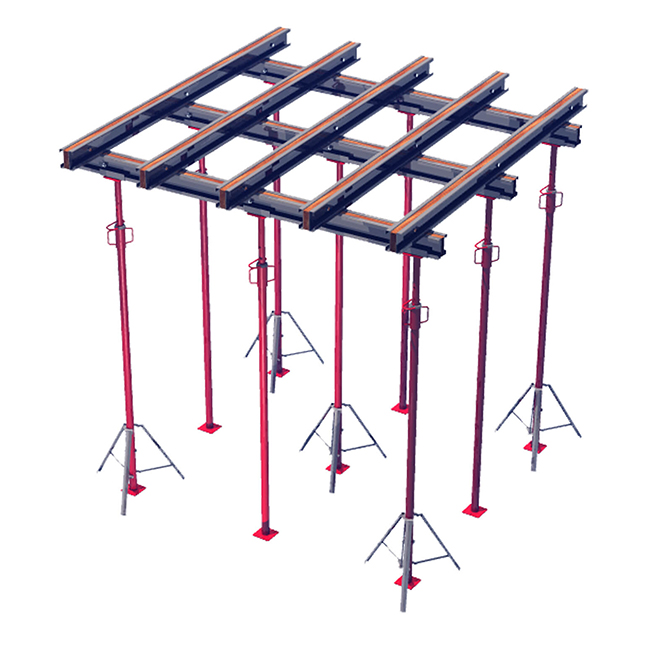
Vague requests generate wildly inconsistent vendor bids. You must lock down the physical and mechanical properties firmly. This section provides the exact parameters you need to demand.
State your required outer and inner tube diameters clearly. Define exact wall thickness tolerances in your documentation. Do not accept a generic "2.0mm" description blindly. You must specify a plus/minus variance limit (e.g., 1.8mm to 2.2mm). Demand specific steel yield strengths from your vendors. Standard Q235 steel suits moderate residential loads effectively. High-demand environments require Q345 steel for enhanced rigidity. We recommend testing material samples independently.
Common Mistakes in Tube Specification:
Accepting negative tolerances exceeding 10% of nominal thickness.
Failing to specify seam weld quality on inner tubes.
Ignoring the clearance gap between inner and outer tubes.
Using Q235 steel for projects requiring high extension heights.
Identify the exact working load limit (WLL) for your site. Note your required safety factor explicitly in the RFQ. Differentiate residential tasks from heavy duty steel prop needs on commercial slabs. Mandate certified load charts from every bidding supplier. These charts must display capacities at multiple extension points. Load ratings drop sharply as the inner tube extends. You must evaluate the capacity at the fully open position.
Table 1: EN 1065 Load Class Reference Chart
EN 1065 Class | Minimum Load (Fully Closed) | Minimum Load (Fully Extended) | Typical Application Environment |
|---|---|---|---|
Class A | Typically 25 kN | Drops significantly (varies by height) | Light residential renovations |
Class B | Typically 30 kN | Maintains moderate load at height | Standard commercial falsework |
Class C | Typically 35 kN | Maintains higher load at height | Heavy commercial concrete slabs |
Class D & E | Exceeds 35 kN | Strictly regulated minimums (e.g. 30kN+) | Civil engineering and infrastructure |
Compare exposed threads against covered collar threads carefully. Exposed threads jam easily after concrete splatters onto them. Cured concrete forces crews to hammer the adjusting nuts aggressively. This hammering damages the threads permanently. Covered threads self-clean and require far less daily maintenance. Specify your adjusting nut handle type clearly.
Drop-forged handles resist stripping under heavy tension beautifully. Cast iron variants become brittle and shatter during impact. Always specify the pitch of the thread explicitly. Coarse threads allow faster height adjustments. Fine threads offer more precise leveling control. We recommend matching the thread pitch to your specific concrete leveling requirements.
Corrosion destroys steel equipment rapidly. Choosing the wrong finish guarantees premature failure. You must align your material finish specification with your project environment.
This finish suits high moisture environments perfectly. Coastal projects demand this level of extreme corrosion resistance. It serves companies prioritizing rental fleet longevity above all else. Zinc bonds metallurgically to the base steel. This process coats both the internal and external tube surfaces. You pay the highest upfront cost for this option. However, it delivers decades of reliable field service.
Actionable Spec: Always require a minimum zinc coating thickness in microns when you specify hot-dip galvanizing. Demand a minimum of 60 to 80 microns for heavy commercial use.
Pre-galvanized tubes offer moderate corrosion resistance economically. Manufacturers form these tubes from already galvanized steel coils. The welding process burns off zinc at the seam. Vendors typically spray zinc paint over this exposed weld. You can use pre-galvanized supports confidently for standard outdoor applications. They balance initial costs against reasonable durability. Avoid using them in highly saline marine environments.
Painted supports provide the lowest initial procurement cost. They work best in dry, arid climates reliably. Short-term projects benefit from this finish immensely. They make sense when long-term asset retention is unnecessary. Paint chips easily during transport and rough site handling. Once chipped, rust spreads underneath the remaining paint layer. Specify dip-painted finishes over spray-painted finishes if choosing this budget route. Dip-painting ensures the internal tube receives some protective coating.
Best Practices for Material Finishes:
Always specify color coding for painted equipment to identify different lengths quickly.
Request salt spray test results for powder-coated batches.
Inspect internal tubes of pre-galvanized units for rust before acceptance.
Store painted equipment under cover when not in active use.
Small hardware components often fail first. Overlooking these details jeopardizes the entire support structure. You must specify these peripheral components just as strictly as the main tubes.
Specify the exact pin style in your request. G-pins, wire rope attached pins, or chain attached variants prevent site loss. Crews frequently lose loose pins in wet concrete. They often substitute lost pins with rebar scraps dangerously. Compare standard pins against high-tensile steel options. High-tensile pins resist shearing forces far better under maximum load. Detail the required diameter of the locking pin precisely. It must match the inner tube holes perfectly to prevent lateral shifting.
Detail exact base plate dimensions and thickness clearly. Standard plates measure 150mm by 150mm. Minimum thickness should be at least 6mm for commercial work. Define specific hole patterns and diameters. These holes allow crews to secure the prop to timber bearers or steel beams securely. Poorly welded base plates snap off during lateral impacts. Specify full-seam continuous welds for plate attachment. Never accept tack-welded base plates for load-bearing applications.
Protect your workers aggressively during dismantling phases. Require a minimum 100mm gap between the outer and inner tubes. This gap must exist when the unit drops to its fully closed position. It prevents severe hand crush injuries automatically. Without this gap, the inner tube slams down onto the outer tube collar. Workers often hold the outer tube near this junction. This simple physical specification eliminates a major site injury hazard completely.
Writing a perfect specification solves only half the problem. You must verify that vendors actually produce what you specified. Robust evaluation protocols separate genuine manufacturers from unreliable traders.
Reject in-house testing documents immediately. Demand formal reports from SGS, CE, or equivalent bodies. Ensure these third-party load test reports match your exact ordered specification. A certificate for a lighter model proves nothing about a heavy-duty model. Check the expiration dates on all provided certificates. Contact the issuing testing body to verify document authenticity. Forged compliance documents circulate widely in global procurement channels.
Set acceptable variances for tube straightness explicitly. Bent tubes buckle under pressure exponentially faster than straight tubes. Outline strict requirements for welding quality. Sloppy welds compromise structural integrity under maximum load instantly. Define acceptable threading tolerances to prevent jammed nuts. Require manufacturers to share their internal quality control checklist. Evaluate how they handle batch failures internally before placing orders.
Request a cut-away sample before authorizing mass production. You can physically measure wall thickness on a cut section accurately. Inspect internal weld seams closely for consistency and penetration. Look for incomplete fusion or excessive slag inclusions. Test the thread smoothness manually on the sample. Verify the zinc coating thickness using a digital gauge. Never authorize a large financial deposit without physical sample approval.
A meticulously specified shoring jack protects site workers, timeline, and bottom line. You must move beyond evaluating simple unit costs. True procurement success requires deep technical understanding. You secure project stability by defining tube dimensions, steel grades, and material finishes precisely. Every detail from locking pins to hand-trap gaps matters.
Review your current project structural load demands against these criteria today. Map out environmental hazards carefully before selecting finishes. Verify all third-party testing documents rigorously. Do not let vague supplier interpretations dictate your site safety standards. Take complete ownership of the technical specifications.
Contact our engineering team today with your RFQ parameters. We provide compliant, certified quotes tailored to your exact needs. Our experts will review your load requirements thoroughly. Download our free "Prop Specification Checklist" to streamline your next procurement cycle safely.
A: "Acrow" represents a proprietary eponym. Builders use it interchangeably with standard adjustable supports. However, technical specifications dictate actual performance. Naming conventions matter far less than verified load capacities, tube thickness, and steel grades. Always evaluate the engineering data rather than relying on brand terminology. A certified Acrow prop meets exact structural criteria regardless of regional nicknames.
A: They share an inverse relationship. As the construction support extends, its overall load-bearing capacity decreases significantly. Engineers must always specify requirements based on the fully extended load demands. A unit carrying 30kN closed might only support 15kN when fully open. Check certified load charts before installation.
A: European projects generally require strict EN 1065 compliance. British territories often rely on BS 4074 standards. You must align specifications with localized standards governing your specific project jurisdiction. Valid certificates from recognized testing bodies prove compliance. Always demand recent third-party documentation to shield your firm from liability.


