


Views: 0 Author: Site Editor Publish Time: 2026-08-13 Origin: Site


Procuring scaffolding carries extremely high stakes for any construction build. You must balance upfront capital expenditure against strict job site safety. Compliance and labor efficiency remain equally critical. The wrong choice leads to severe project delays. It also causes massive budget overruns. Rising labor costs make traditional scaffolding methods a significant financial liability today. Complex architectural geometries further expose the limitations of outdated equipment. Contractors simply cannot afford slow erection times. Traditional tube-and-fitting setups waste too many man-hours.
Ringlock scaffolding has emerged as the premier solution for these challenges. This modular framework provides unparalleled adaptability for complex commercial environments. Industrial projects benefit heavily from its structural integrity. However, choosing the right components requires deep evaluation. You must look past basic marketing claims. Evaluating hard structural data and material standards is essential. Overall project value depends heavily on making well-researched procurement decisions.
The primary ROI of a modular scaffolding system like ringlock lies in reduced labor hours (fast assembly) and adaptability to complex project geometries.
Evaluating material specifications—specifically the Q355B scaffold standard and hot-dip galvanization—is critical for safety and asset longevity.
Total project cost must account for initial procurement, crew training time, and logistics, not just the per-ton price.
Vetting a ringlock supplier requires demanding verifiable load test certifications and assessing their inventory scalability for your specific project timeline.
Labor costs dominate modern construction budgets. You need efficient systems to protect profit margins. Ringlock systems directly address this labor challenge. The design relies on pre-measured wedge and rosette connections. Workers slide the ledger over the rosette node. They insert the wedge and strike it secure. This action takes seconds.
This automated locking mechanism eliminates manual measuring. It removes the time-consuming tightening of traditional couplers. Your crews save massive erection hours. Dismantling happens equally fast. You can move onto the next project phase sooner. This labor reduction easily justifies the system upgrade.
Geometrical adaptability presents another major advantage. Industrial sites often feature complex pipework. Curved tanks require close personnel access. The ringlock node design offers eight connection points per rosette. You get varied angles seamlessly. This adaptability matters heavily for high-load falsework. Traditional frames cannot handle these irregular shapes efficiently. Ringlock scaffolding molds to the building footprint perfectly.
You must understand the breakeven point clearly. Ringlock requires a higher initial capital investment. You spend more upfront compared to basic tube setups. However, repeated use recoups this cost rapidly. Fast turnarounds shrink overall project schedules. Heavy-duty builds demand this operational speed.
Repeated Deployments: Frequent use dilutes the initial purchase cost.
Aggressive Timelines: Faster assembly prevents costly schedule overruns.
Heavy Industrial Loads: High-capacity nodes support massive structural weights.
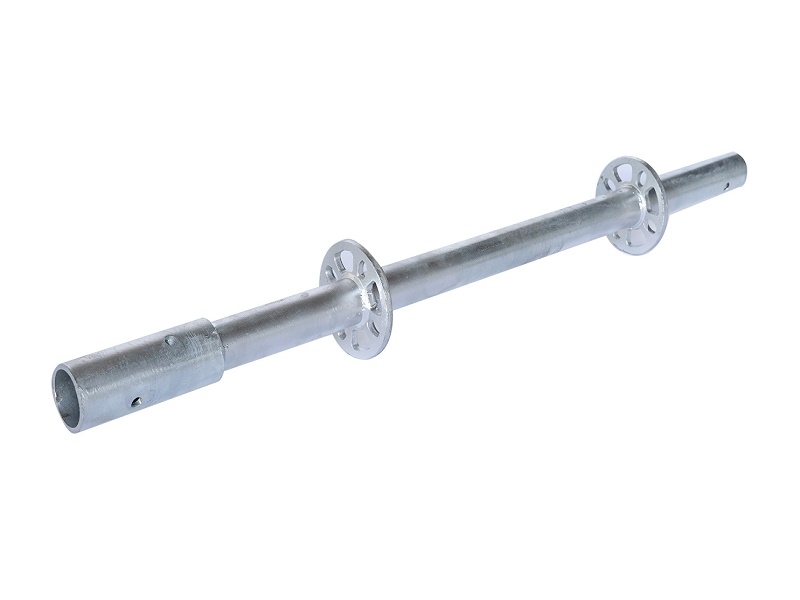
Scaffolding selection requires objective comparisons. You must evaluate node mechanisms carefully. Cuplock uses sliding top cups. Workers hammer these cups down to secure the ledgers. Cuplock works exceptionally well for standard elevations. You can erect straight facades quickly.
However, ringlock dominates complex layouts. It provides superior diagonal bracing capabilities. The eight-hole rosette allows highly versatile angles. You can adapt the structure to highly irregular shapes easily. Cuplock struggles when geometries become circular or highly angled.
Tube and clamp systems offer ultimate flexibility. You can place a tube anywhere along another tube. However, this method requires intense labor. Workers must measure everything perfectly on site. Human error introduces massive safety risks. Load calculations become highly unpredictable due to uneven tightening. Couplers slip if workers fail to torque them correctly. Modular systems remove this human error completely.
System Type | Best For Project Type | Labor Requirement | Geometrical Complexity | Initial Budget |
|---|---|---|---|---|
Ringlock | Industrial, Offshore, Complex Builds | Low (Fast Assembly) | Very High (8-way connections) | High |
Cuplock | Standard Commercial, Straight Facades | Low (Fast Assembly) | Moderate (Fixed angles) | Moderate to High |
Tube & Clamp | Maintenance, Minor Custom Work | Very High (Slow Assembly) | High (Unlimited flexibility) | Low |
High-strength steel ensures structural safety. Standard carbon steel adds unnecessary weight. It also compromises overall load capacity. You must demand the Q355B scaffold standard or similar regional grades. S355 acts as a highly reliable equivalent in European markets. Higher yield strength handles heavier vertical loads safely. It keeps the equipment physically manageable for your crews. Lighter components reduce extreme worker fatigue during erection.
Best Practice: Always request Mill Test Reports (MTRs) before purchasing.
Common Mistake: Accepting Q235 steel for heavy industrial falsework applications.
Surface treatment dictates equipment lifespan. Offshore or industrial sites destroy painted steel quickly. A galvanized ringlock scaffold provides essential environmental protection. Hot-dip galvanizing coats both inside and outside surfaces. It prevents hidden internal rust. Electro-galvanizing only provides a thin outer layer. You need hot-dip treatments for multi-year commercial deployments. It guarantees structural safety over decades of use.
Best Practice: Specify a minimum zinc coating thickness (e.g., 80 microns).
Common Mistake: Storing wet components in sealed containers, causing white rust.
Manufacturing quality directly impacts site safety. Automated robotic welding heavily outshines manual methods. Robots provide consistent weld pools around every joint. Look for full-penetration welds around the rosette nodes. Weak welds cause catastrophic shear failures under heavy loads. You cannot compromise on this manufacturing detail.
Best Practice: Audit the factory to verify the use of robotic welding arms.
Common Mistake: Ignoring slag inclusions or porosity in ledger end welds.
Self-reported structural data means nothing. Demand authentic third-party test reports. They must align strictly with regional safety mandates. Check for OSHA compliance in North America. Look for EN 12810 or EN 12811 certifications for European markets. AS/NZS compliance remains critical for Australia. Authentic certificates prove true structural integrity under stress.
Best Practice: Verify testing certificates directly through the issuing laboratory.
Common Mistake: Trusting outdated compliance reports from generic testing bodies.
Hidden costs exist in every major procurement. You must plan for them carefully. Switching to a new modular scaffolding system requires a distinct learning curve. Your crews will need dedicated transition training. Initial erection times might lag at first. Workers need time to master the rosette-and-wedge logic. Speed increases rapidly after this initial acclimatization phase.
Component loss happens frequently on active sites. Loose components disappear into mud or debris. Modern systems solve this using captive wedges. The wedge stays permanently attached to the ledger head. This prevents massive replacement costs over time. However, you still need strict inventory tracking. Software solutions help maintain visibility over all deployed assets.
Storage footprints change drastically. Volumetric space requirements differ from older tube setups. Laydown yards need proper organizational racks. Rosettes can snag if workers stack standards carelessly. Transport trucks require careful packing strategies. You must think about logistics long before the equipment arrives on site. Proper stillages prevent transit damage efficiently.
Traceability proves true manufacturing quality. Audit the quality assurance process rigorously. Ask your ringlock supplier for comprehensive raw material certificates. Mill test reports verify the exact steel grades used. Check their dimensional tolerances carefully. Batch testing guarantees consistency across massive container orders. Variations in wall thickness compromise overall load ratings.
Evaluate scalability thoroughly. Can the factory handle emergency component requests? Mid-project expansions require fast component delivery. A cheap vendor becomes a liability quickly during crises. They often fail to deliver missing parts on time. You need a partner holding significant buffer stock. Lead times dictate your project momentum.
Seek deep engineering support. Choose a true technical partner. Standard vendors merely sell metal parts. True partners offer detailed 3D scaffolding design services. They provide complex structural load calculations. Shortlist those capable of offering on-site technical guidance. This engineering support prevents critical design flaws before erection begins.
Choosing ringlock scaffolding serves as a long-term investment. It secures job site safety and maximizes labor efficiency. Asset longevity remains guaranteed if you enforce strict material specifications. Demanding Q355B steel and hot-dip galvanization is non-negotiable for serious contractors. You must look beyond the initial purchase price to understand true value.
Your next steps require practical internal auditing. Review your upcoming project pipeline carefully. Calculate your current labor-to-material cost ratios. Identify how many hours traditional systems waste. Begin requesting technical documentation from shortlisted manufacturers immediately. Compare their third-party certifications side by side.
Do not wait until the project breaks ground. Request a dedicated structural consultation today. Ask suppliers for a project-specific ROI calculation based on your drawings. Demand a detailed technical quote for your next major commercial build. Proactive procurement secures better pricing and guarantees timely delivery.
A: No. You must avoid mixing different brands. Dimensions might appear identical initially. However, variations in steel grade, tube wall thickness, and rosette tolerances exist. Mixing components compromises the system's overall load rating. It also invalidates safety compliance and manufacturer warranties.
A: A quality hot-dip galvanized system typically lasts 10 to 15 years. This timeframe depends on environmental harshness and proper maintenance. Harsh offshore environments reduce this slightly. In contrast, painted systems often rust and degrade within three to five years.
A: Higher yield strength allows manufacturers to use thinner tube walls. This creates lighter components without sacrificing load capacity. Lighter parts lower transportation costs significantly. They also reduce crew fatigue, speeding up assembly times and cutting expensive labor hours.


